
Virunga Mountains Gorillas and Golden Monkey Safaris
Mgahinga rewards patient travellers. Its compact size, striking volcanic landscapes, and intimate gorilla encounters make it unforgettable. With careful planning, you can combine gorilla trekking with golden monkeys, volcano hikes, and cultural experiences for an adventurous, deeply rewarding East African safari.
Mgahinga Gorilla Trek & Golden Monkey Safaris.
Mgahinga Gorilla National Park sits in the far southwestern corner of Uganda, where the country meets Rwanda and the Democratic Republic of Congo. At roughly 33 square kilometres, it is the smallest national park in Uganda, but it is one of the most scenic and one of the least crowded places in Africa to see mountain gorillas. The park forms part of the Virunga Conservation Area, a trans-boundary landscape shared with Rwanda’s Volcanoes National Park and the DRC’s Virunga National Park. Together these protect the last remaining mountain gorillas on Earth, a population of a little over a thousand animals spread across these volcanic slopes.
Ultimate Uganda Safaris
About ~ Mgahinga National Park
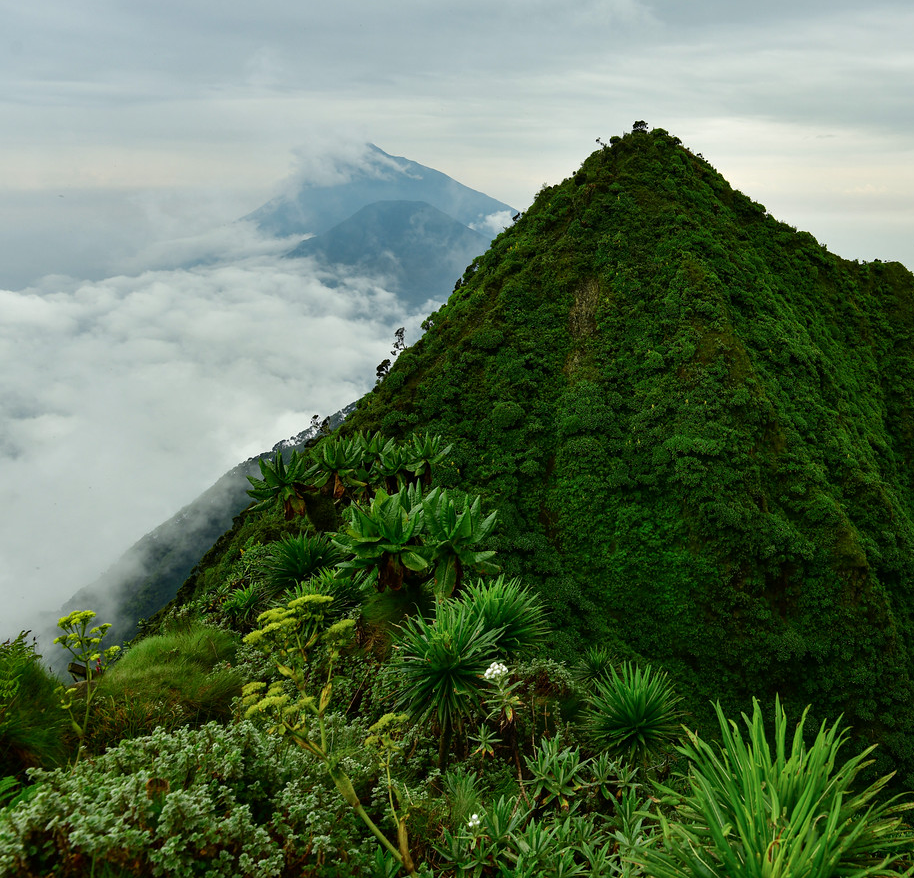
The park takes its name from the Virunga volcanic chain, which rises steeply from the surrounding farmland. Its three volcanoes, Mount Muhabura, Mount Gahinga, and Mount Sabinyo, form the park’s dramatic backdrop. Sabinyo is the most distinctive, with its jagged ridges and three peaks that mark the meeting point of Uganda, Rwanda, and the DRC. Gahinga has a crater lake, and Muhabura is the highest of the group. The landscape shifts from farmland at the base to bamboo, montane forest, and Afro-alpine heath near the summits, and each zone supports different wildlife. Because the park is compact, visitors can move between these habitats in a single day, which is part of its appeal.
Gorilla Trekking
Gorilla trekking is the reason most visitors come. Mgahinga has one habituated gorilla family, the Nyakagezi group, which typically numbers around a dozen or more individuals. Habituation means the animals have grown used to human presence over many years of careful, controlled contact by rangers and researchers. This allows visitors to observe them closely without disturbing their daily routines. The family’s home range lies on the lower slopes of the volcanoes, and the terrain is steep, muddy, and often overgrown, so the trek can be physically demanding even though the distances are short.
Each trekking group is limited to eight people, and only eight permits are issued daily for the park. This makes Mgahinga much less crowded than Bwindi Impenetrable National Park, where dozens of permits are released each day across several sectors. The low volume is one of the park’s greatest advantages, since the gorilla encounter feels intimate and unhurried. The Uganda Wildlife Authority (UWA) allows one hour with the gorillas once they are found, and the time often passes quickly as the animals feed, play, groom, and occasionally wander close to observers.
Minimum age for trekking is 15, and the authorities advise that anyone with a respiratory illness or other contagious condition should not participate, since gorillas are highly vulnerable to human diseases. Visitors should be prepared for a hike that may last anywhere from an hour to several hours, depending on where the family has moved overnight. Trekking boots, rain gear, gloves, a long-sleeved top, and a walking stick are strongly recommended. Porters are available for those who need help on the slopes.
Permit costs have risen in recent years. The fee for foreign non-residents is widely reported as $800 for 2026, with lower rates for foreign residents and East African citizens. There are seasonal reductions, but prices and policies can change, so travellers should confirm before budgeting. Since March 2026, full payment is reportedly required at the time of booking, so it is important to read the cancellation terms carefully. If illness prevents a visitor from trekking and a park warden confirms it, UWA refund at least half the permit fee.
Other Safari Activities
Mgahinga offers much more than gorilla trekking, and many visitors stay two or three days to explore it.
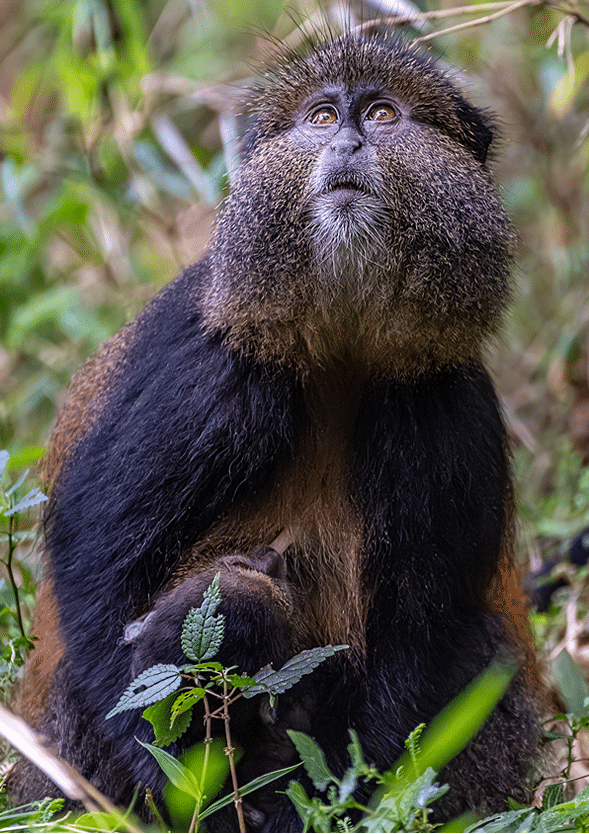
Golden monkey trekking is the most popular alternative. These gold-orange monkeys with black faces live in the bamboo forests on Mount Gahinga and Mount Sabinyo. Treks take two to three hours on calmer, easier terrain than the gorilla trail. Permits cost roughly $50 for non-residents, and a pricier habituation experience allows a longer, more immersive visit.
Keen walkers can climb the volcanoes. Mount Sabinyo is a demanding full-day climb requiring fitness, a guide, and steady nerves on rocky ridges. Mount Gahinga offers a gentler route to a crater lake, while Mount Muhabura is longer and rewards hikers with views across three countries. Early starts help avoid afternoon cloud.
The Batwa Trail introduces the indigenous forest people evicted when the forest became protected. Batwa guides demonstrate traditional hunting, foraging, medicine, and music, directly supporting their communities.
Safari Packages
Mgahinga is usually visited as part of a broader itinerary rather than on its own, since the park is some distance from major cities and most visitors combine it with other destinations. The simplest option is a short gorilla-focused package of two or three days, which typically includes transport from Kampala or another regional hub, lodging near the park, the gorilla permit, and one trek. Travellers who want more time often add golden monkey trekking, a Batwa cultural walk, a volcano hike, or a day at Lake Bunyonyi, a scenic lake a few hours away.
1 Day Gorilla Trekking
The simplest option is a short gorilla-focused package of two or three days, which typically includes transport from Kampala or another regional hub, lodging near the park, the gorilla permit, and one trek. Travellers who want more time often add golden monkey trekking, a Batwa cultural walk, a volcano hike, or a day at Lake Bunyonyi, a scenic lake a few hours away.
2 Days Mgahinga Safari
The simplest option is a short gorilla-focused package of two or three days, which typically includes transport from Kampala or another regional hub, lodging near the park, the gorilla permit, and one trek. Travellers who want more time often add golden monkey trekking, a Batwa cultural walk, a volcano hike, or a day at Lake Bunyonyi, a scenic lake a few hours away.
3 Days Mgahinga & Bwindi
The simplest option is a short gorilla-focused package of two or three days, which typically includes transport from Kampala or another regional hub, lodging near the park, the gorilla permit, and one trek. Travellers who want more time often add golden monkey trekking, a Batwa cultural walk, a volcano hike, or a day at Lake Bunyonyi, a scenic lake a few hours away.
10 Days Rwanda & Uganda
The simplest option is a short gorilla-focused package of two or three days, which typically includes transport from Kampala or another regional hub, lodging near the park, the gorilla permit, and one trek. Travellers who want more time often add golden monkey trekking, a Batwa cultural walk, a volcano hike, or a day at Lake Bunyonyi, a scenic lake a few hours away.
8 Days Gorillas & Wildlife
The simplest option is a short gorilla-focused package of two or three days, which typically includes transport from Kampala or another regional hub, lodging near the park, the gorilla permit, and one trek. Travellers who want more time often add golden monkey trekking, a Batwa cultural walk, a volcano hike, or a day at Lake Bunyonyi, a scenic lake a few hours away.
16 Days Best of Uganda
The simplest option is a short gorilla-focused package of two or three days, which typically includes transport from Kampala or another regional hub, lodging near the park, the gorilla permit, and one trek. Travellers who want more time often add golden monkey trekking, a Batwa cultural walk, a volcano hike, or a day at Lake Bunyonyi, a scenic lake a few hours away.
Safari activities
Mgahinga National Park

Mountain Gorilla Trek
Mgahinga offers more than gorilla trekking, and many visitors spend two or three days exploring the park's other attractions.

Golden Monkey Tracking
Golden monkey trekking is the most popular alternative. These striking monkeys, with their gold-orange fur and black faces, live in the bamboo forests on the slopes of Mount Gahinga and Mount Sabinyo

Hiking Tours
Hiking and volcano climbing draw keen walkers. Mount Sabinyo is a challenging full-day climb that requires good fitness, a guide, and steady nerves on rocky ridges. Mount Gahinga offers a gentler route to its crater lake, while Mount Muhabura is a longer climb that rewards hikers with broad views across three countries.

Bird Watching Tours
Birdwatching is excellent throughout the park, with montane and bamboo forest species that are rarely seen elsewhere. Lake Mulehe and the surrounding wetlands also attract waterbirds, and experienced guides can locate endemic species for dedicated birders.
Where to Stay
Accommodation around Mgahinga ranges from modest guesthouses to comfortable lodges. The nearest town is Kisoro, a small market centre a short drive from the park gate, where budget hotels and guesthouses cater to backpackers and independent travellers. Amajambere Guest House and the Traveller’s Rest Hotel are commonly mentioned options in town, offering simple rooms and basic meals.
For more comfort, visitors can choose lodges located within or near the park boundary. Mount Gahinga Lodge is known for its scenic setting and proximity to the trailheads, with views of the volcanoes from its grounds. Clouds Mountain Gorilla Lodge occupies a hillside position with wide vistas and a relaxed atmosphere, and it is popular with couples and small groups. Mgahinga Gorilla Lodge sits close to the park and offers comfortable rooms and organised excursions. Availability and rates change regularly, especially during peak months, so early booking is strongly advised.
Travellers who prefer a quieter base can stay around Lake Bunyonyi, a deep, multi-island lake some hours to the north. The lakeside resorts there offer boating, canoeing, and tranquil evenings, and they serve as a pleasant contrast to the mountain scenery. The drive from the lake to Mgahinga takes a few hours, so visitors should plan for a long day on the road.
Mount Gahinga Lodge
Is a small luxury lodge at the foot of the Virunga volcanoes in southwest Uganda. Its thatched cottages have fireplaces and volcano views. It’s a base for gorilla trekking, golden monkey tracking, hiking, and Batwa cultural experiences.
Amajambere Iwacu Community Camp
A community-owned budget lodge at Mgahinga’s Ntebeko Gate in Kisoro, Uganda. It offers Bandas, dormitories and camping
Travellers Rest Hotel
is a historic lodge in Kisoro, southwestern Uganda, near Mgahinga Gorilla National Park. Once frequented by Dian Fossey, it offers colonial-era charm, a garden setting, and a restaurant.
Mutanda Lake Resort
sits on the shores of Lake Mutanda offerING lakeside lodging with views of the Virunga volcanoes. It also makes a peaceful base for gorilla trekking in nearby Mgahinga.
Best Time to Visit
Gorilla trekking is possible throughout the year, but the best conditions usually come during the dry seasons. The main dry period runs from June to September, when trails are firmer and easier to navigate, and the cooler, clearer weather makes the volcanoes more visible. A second, shorter dry spell occurs from about December to February. These months are the most popular and tend to be the most expensive, so permits sell out quickly and early reservations are essential.
The rainy seasons, from March to May and October to November, bring heavier rain, muddy trails, and occasional cloud cover over the peaks. Trekking remains possible and can be rewarding, since the forest is lush and the gorillas are often active, but the terrain is more slippery and demanding. Many operators offer lower rates during these months, and fewer visitors means a more peaceful experience. The period from April to May and November is often considered a low season for pricing, though travellers should check current fees and discounts.
Temperatures on the mountain can be surprisingly cold, particularly in the early morning and evening, so warm layers are essential even if the day is sunny. Visitors should bring waterproof clothing, sturdy footwear, and insect repellent.