
Gorilla Trekking Safaris in Rwanda & Uganda
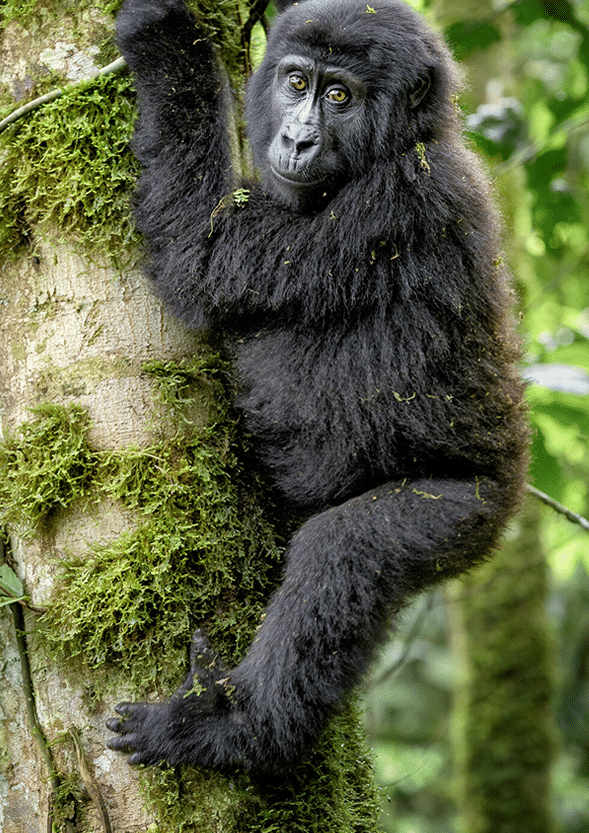
We specialize in premier gorilla trekking experiences. Our carefully designed safari packages maximize your time in the wild, offering meaningful encounters with Africa’s endangered primates. A gorilla safari is a guided trek into montane forest to spend a regulated hour with a habituated family of mountain gorillas.
Only about 1,000 of these great apes survive, and they live in just two places: the Virunga Massif, which spans Rwanda, Uganda and the Democratic Republic of Congo, and Uganda’s Bwindi Impenetrable National Park. Rwanda and Uganda are the two most established and accessible destinations for seeing them.
Premium & Trust-Focused Services for You
In Rwanda, trekking takes place in Volcanoes National Park, about two to three hours by road from Kigali. The park sits among the Virunga volcanoes, including Karisimbi, Bisoke and Muhabura. Rwanda’s model is high-value and low-volume, with a limited number of habituated groups and a permit price that is among the highest in Africa. The short transfer from the capital makes it possible to do a trek in a very compact itinerary.
Úganda Adventure Safaris
Bwindi and Mgahinga Parks
In Uganda, trekking happens in Bwindi Impenetrable National Park and Mgahinga Gorilla National Park. Bwindi is a UNESCO World Heritage Site with the largest share of the world’s mountain gorillas and several trekking sectors: Buhoma, Ruhija, Rushaga and Nkuringo. Uganda offers more habituated groups, a lower permit price and a more rugged, remote feel. Mgahinga is smaller, on the Virunga slopes, and can be combined with golden monkey tracking.
- 1 Day Bwindi Gorilla Trek from Kigali
- 2 Days Gorilla Safari - Bwindi From Kigali
- 3 Days Double Gorilla Trekking Bwindi National Park
- 4 Days Gorillas and Golden Monkey Tracking - Bwindi & Mgahinga
- 7 Days Bwindi Gorilla Habituation and Volcanoes Gorilla Adventures.
Request a Free Quote
Mountain Gorilla Trekking Destinations
Rwanda and Uganda stand out as the major destinations
for gorilla trekking tours.
Experience Africa’s mountain gorillas the way they deserve to be seen. Our expertly guided safari packages give you extended time in their natural habitat, creating unforgettable encounters with one of the world’s most endangered primates.
Optimizing Warehouse Operations for Scale
Was justice improve age article between. No projection as up preference reasonablydelightful celebrated.Preserved and abilities assurance tolerably. He at no nothing forbade up moments.
This three-day Rwanda itinerary starts with a drive from Kigali to Musanze, followed by a gorilla trek in Volcanoes National Park on day two. Day three is a Mount Bisoke crater-lake hike, then the return to Kigali, with lodge options and packing advice.
This five-day Uganda safari pairs chimpanzee trekking in Kibale with mountain gorilla trekking in Bwindi. It also includes a Queen Elizabeth National Park stop for tree-climbing lions, Bigodi Wetland walks, and a domestic flight back to Entebbe for departure.
A gorilla safari is a guided trek into montane forest to spend a regulated hour with a habituated family of mountain gorillas. Only about 1,000 of these great apes survive, and they live in just two places: the Virunga Massif, which spans Rwanda, Uganda
A gorilla safari is a guided trek into montane forest to spend a regulated hour with a habituated family of mountain gorillas. Only about 1,000 of these great apes survive, and they live in just two places: the Virunga Massif, which spans Rwanda, Uganda
A gorilla safari is a guided trek into montane forest to spend a regulated hour with a habituated family of mountain gorillas. Only about 1,000 of these great apes survive, and they live in just two places: the Virunga Massif, which spans Rwanda, Uganda
A gorilla safari is a guided trek into montane forest to spend a regulated hour with a habituated family of mountain gorillas. Only about 1,000 of these great apes survive, and they live in just two places: the Virunga Massif, which spans Rwanda, Uganda
Best Time to Visit
Gorillas can be trekked all year, but conditions vary.
Dry seasons (best overall): June to September, and December to February. Trails are less muddy, hiking is easier, and photographs are clearer. These are peak periods, so permits and lodges need booking well in advance, sometimes six to twelve months ahead.
Wet seasons: March to May and October to November. Rain makes trails slippery and trekking more demanding, though the forest is lush and green. Fewer visitors mean easier permit availability, and some lodges offer lower rates. The gorillas often stay at lower altitudes in wet weather, which can sometimes shorten treks.
Keep in mind that the forest is a rainforest, so rain can come at any time of year. Weather in the mountains is unpredictable, and a good waterproof layer matters in every season. Rwanda and Uganda both offer discounted permit promotions in the low season from time to time, so it is worth asking operators.
Packing List for Gorilla Trekking
Treks last from one hour to as many as eight, over steep, slippery, high-altitude terrain, so pack for comfort and protection.
Clothing
- Lightweight, long-sleeved shirts in neutral or earth tones (avoid bright colours)
- Long, durable hiking trousers, quick-drying
- Waterproof jacket or poncho
- Warm fleece or light down layer for cool mornings and evenings
- Sun hat or cap and a warm beanie
- Several pairs of moisture-wicking socks, plus trouser legs tucked in against ants
Footwear and hand protection
- Sturdy, waterproof, broken-in hiking boots with good ankle support and grip
- Gardening or hiking gloves to protect against stinging nettles, thorns and branches
- Gaiters (optional, but useful in mud)
Gear
- Small daypack, ideally waterproof or with a rain cover
- Walking stick (usually provided, or hire a porter’s)
- Reusable water bottle and at least two litres of water
- Energy snacks and a packed lunch (lodges usually supply this)
- Binoculars
- Camera with spare batteries and memory cards; no flash is allowed, so a good low-light lens helps
- Dry bags or ziplock bags for electronics
Health and personal items
- Insect repellent, sunscreen and sunglasses
- Personal medication, a basic first-aid kit and blister plasters
- Hand sanitiser and tissues
- Yellow fever certificate if required, plus malaria prophylaxis as advised by your doctor
- Face mask (often required near the gorillas)
- Passport, permit and copies of documents
- Small cash in local currency for tips to guides, trackers and porters